
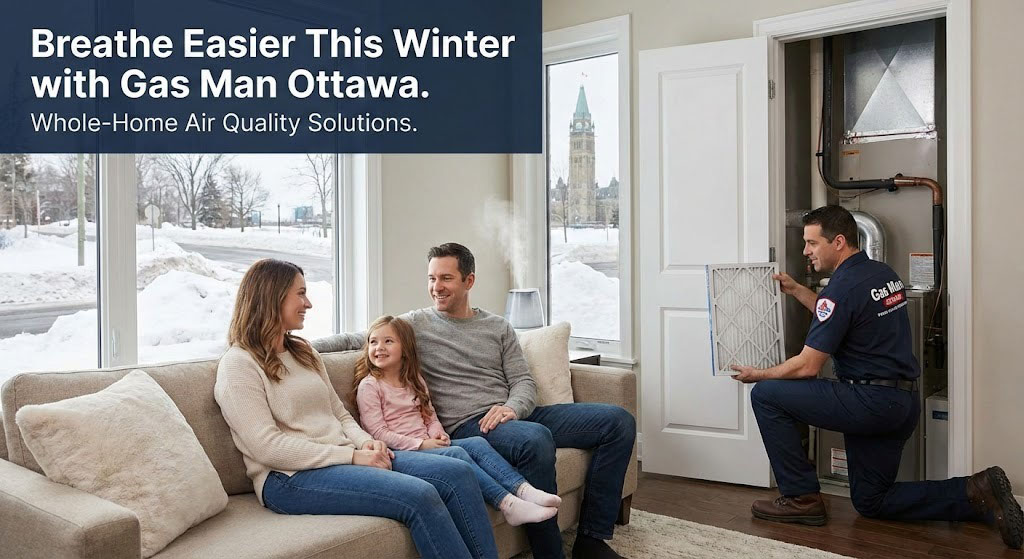
Indoor Air Quality in Winter: Breathe Easier in Your Ottawa Home
Ottawa winters force us indoors for months at a time. While sealing up your home keeps the cold out, it also traps pollutants, allergens, and stale air inside. The result? Many Ottawa families spend the coldest months breathing air that’s far worse than what’s outside.
Poor indoor air quality isn’t just uncomfortable—it can affect your health, sleep quality, and overall well-being. The good news is that with the right strategies and equipment, you can dramatically improve the air you breathe all winter long.
In this guide, we’ll explore why winter air quality suffers, the health impacts you should know about, and practical solutions to create a healthier home environment.
Why Indoor Air Quality Drops in Winter
Understanding what causes poor winter air quality helps you address the root problems effectively.
Lack of Ventilation
During Ottawa’s brutal winters, opening windows isn’t practical. Homes stay sealed tight for months, trapping everything inside—cooking fumes, pet dander, dust, cleaning product chemicals, and the carbon dioxide we exhale. Without fresh air exchange, pollutant concentrations steadily increase.
Extremely Dry Air
Cold air holds very little moisture. When your furnace heats this air, relative humidity can drop to 15-25%—drier than the Sahara Desert. This extreme dryness causes:
- Dry, cracked skin and irritated eyes
- Increased susceptibility to respiratory infections
- Aggravated asthma and allergy symptoms
- Static electricity throughout your home
- Damage to wood floors, furniture, and musical instruments
Increased Furnace Runtime
Your furnace runs constantly during Ottawa winters, circulating air through your ductwork repeatedly. If your filter is dirty or your ducts contain accumulated dust and debris, these particles get redistributed throughout your home every heating cycle.
Sealed Building Envelope
Modern homes are built for energy efficiency, which means they’re tightly sealed. While this saves on heating costs, it also means indoor pollutants have nowhere to escape. Volatile organic compounds (VOCs) from paint, furniture, cleaning products, and building materials accumulate without adequate ventilation.
Common Winter Indoor Air Pollutants
Knowing what’s in your air helps you choose the right solutions.
Dust and Dust Mites
Dust accumulates faster when homes are closed up. Dust mites thrive in bedding, carpets, and upholstered furniture, producing allergens that trigger respiratory symptoms in sensitive individuals.
Pet Dander
With pets spending more time indoors during winter, dander levels increase significantly. These microscopic skin particles remain airborne for hours and settle on every surface.
Mold and Mildew
Condensation on windows, poor bathroom ventilation, and humidity imbalances create conditions for mold growth. Even small amounts of mold can affect air quality and trigger allergic reactions.
Carbon Monoxide
Gas furnaces, water heaters, and fireplaces produce carbon monoxide during combustion. Properly functioning equipment vents this safely outside, but cracks in heat exchangers or blocked venting can allow this odourless, deadly gas to enter your living space. Annual furnace maintenance is essential for detecting these hazards.
Volatile Organic Compounds (VOCs)
Common household items release VOCs, including cleaning products, air fresheners, paint, new furniture, and even some candles. Without ventilation, these chemicals accumulate and can cause headaches, dizziness, and respiratory irritation.
Health Impacts of Poor Indoor Air Quality
The air quality in your home directly affects your family’s health, especially during the months spent primarily indoors.
Short-Term Effects
- Headaches and fatigue
- Eye, nose, and throat irritation
- Worsened allergy and asthma symptoms
- Difficulty sleeping
- Frequent colds and respiratory infections
- Dry, itchy skin
Long-Term Effects
Prolonged exposure to poor indoor air quality has been linked to:
- Chronic respiratory conditions
- Increased cardiovascular stress
- Weakened immune function
- Reduced cognitive performance
Children, elderly family members, and those with existing respiratory conditions are particularly vulnerable to indoor air quality issues.
Solutions for Healthier Winter Air
Improving your indoor air quality involves addressing multiple factors. Here’s a comprehensive approach.
1. Upgrade Your Air Filtration
Your furnace filter is your first line of defence against airborne particles.
Choose the right filter rating: Standard fibreglass filters (MERV 1-4) catch large particles but miss most allergens. Upgrade to pleated filters rated MERV 8-11 to capture dust, pollen, mold spores, and pet dander without restricting airflow.
Change filters monthly during heating season: When your furnace runs constantly, filters clog faster. Check monthly and replace when visibly dirty.
Consider HEPA filtration: For families with severe allergies or respiratory conditions, whole-home HEPA filtration systems can remove 99.97% of particles down to 0.3 microns.
2. Control Humidity Levels
Maintaining proper humidity (30-50%) dramatically improves comfort and health.
Install a whole-home humidifier: A central humidifier connects to your furnace and automatically adds moisture to heated air as it circulates. This is far more effective than portable units and requires minimal maintenance.
Benefits of proper humidity:
- Reduced respiratory infections (viruses survive longer in dry air)
- Relief from dry skin, lips, and nasal passages
- Elimination of static electricity
- Protection for wood floors and furniture
- Improved perceived warmth (humid air feels warmer, allowing lower thermostat settings)
3. Improve Ventilation
Fresh air exchange is essential for diluting indoor pollutants.
Heat Recovery Ventilator (HRV): An HRV exchanges stale indoor air with fresh outdoor air while recovering up to 80% of the heat from outgoing air. This provides continuous ventilation without significant energy loss—ideal for Ottawa’s cold climate.
Use exhaust fans: Run bathroom and kitchen exhaust fans to remove moisture and cooking fumes. Make sure they vent outdoors, not into your attic.
Crack a window occasionally: Even a few minutes of fresh air exchange on milder winter days can significantly improve indoor air quality.
4. Add Air Purification
For additional protection, consider air purification systems.
Whole-home air purifiers: These integrate with your HVAC system to continuously clean air throughout your home. Options include electronic air cleaners, UV germicidal lights, and photocatalytic oxidation systems.
UV germicidal lights: Installed in your ductwork, UV lights kill bacteria, viruses, and mold spores as air passes through your HVAC system. They’re particularly effective at keeping your evaporator coil clean and preventing microbial growth.
Learn more about air quality solutions available for your Ottawa home.
5. Maintain Your HVAC System
A well-maintained heating system contributes to better air quality.
Schedule annual furnace maintenance: Professional HVAC maintenance includes cleaning burners, checking the heat exchanger for cracks, testing safety controls, and ensuring proper combustion. This prevents carbon monoxide issues and keeps your system running efficiently.
Consider duct cleaning: If you notice excessive dust, musty odours, or visible debris around vents, professional duct cleaning removes accumulated contaminants from your entire air distribution system.
Inspect and seal ductwork: Leaky ducts can draw in dust, insulation fibres, and pollutants from unconditioned spaces like attics and crawlspaces.
6. Reduce Pollutant Sources
Prevention is as important as filtration.
- Use natural cleaning products: Choose fragrance-free, low-VOC cleaning supplies
- Avoid synthetic air fresheners: These add chemicals to your air rather than improving quality
- Remove shoes at the door: Prevents tracking in outdoor pollutants, pesticides, and allergens
- Vacuum regularly with HEPA filtration: Standard vacuums can redistribute fine particles
- Wash bedding weekly in hot water: Kills dust mites and removes allergens
- Groom pets regularly: Reduces dander accumulation
Signs Your Home Has Air Quality Problems
Watch for these indicators that your indoor air needs attention:
- Family members experience frequent headaches or fatigue at home
- Allergy or asthma symptoms worsen indoors
- Excessive dust accumulation despite regular cleaning
- Musty or stale odours
- Condensation on windows
- Visible mold growth anywhere in your home
- Static electricity problems
- Dry skin, cracked lips, or frequent nosebleeds
If you notice multiple signs, consider a professional indoor air quality assessment to identify specific issues.
Carbon Monoxide Safety
Carbon monoxide deserves special attention during heating season. This colourless, odourless gas is produced by any fuel-burning appliance—furnaces, water heaters, gas fireplaces, and stoves.
Essential Safety Steps
- Install CO detectors: Place carbon monoxide detectors on every level of your home, especially near bedrooms and fuel-burning appliances. Test monthly and replace batteries annually.
- Schedule annual inspections: Have all fuel-burning equipment inspected annually by a licensed technician. Cracked heat exchangers and blocked venting are common sources of CO leaks.
- Know the symptoms: Headaches, dizziness, nausea, confusion, and fatigue can indicate CO exposure. If multiple family members experience these symptoms simultaneously, evacuate and call emergency services.
- Never ignore your detector: If your CO alarm sounds, take it seriously. Evacuate immediately and call 911.
Recommended Indoor Air Quality Equipment
For Ottawa homes, we recommend these air quality solutions:
| Solution | Best For | Key Benefit |
|---|---|---|
| Whole-Home Humidifier | Every Ottawa home | Eliminates dry winter air problems |
| MERV 11 Pleated Filter | General improvement | Captures most allergens affordably |
| Heat Recovery Ventilator | Tightly sealed homes | Fresh air without energy loss |
| UV Germicidal Light | Allergy/illness prevention | Kills airborne pathogens |
| Whole-Home Air Purifier | Severe allergies/asthma | Maximum particle removal |
Frequently Asked Questions
What humidity level should I maintain in winter?
Aim for 30-50% relative humidity. Below 30% causes dry air symptoms; above 50% can promote mold growth and condensation on windows. A whole-home humidifier with automatic controls maintains optimal levels throughout your home.
How often should I change my furnace filter in winter?
Check monthly and replace when visibly dirty. During peak heating season when your furnace runs constantly, most filters need replacement every 30-60 days. Higher-efficiency filters may last 60-90 days.
Can I improve air quality without major equipment purchases?
Yes. Start with these low-cost steps: upgrade to better furnace filters, run bathroom fans during and after showers, vacuum regularly with a HEPA vacuum, reduce chemical cleaners and air fresheners, and open windows briefly on milder days.
How do I know if my furnace is producing carbon monoxide?
You can’t detect carbon monoxide without a detector—it’s odourless and colourless. Install CO detectors and schedule annual furnace maintenance to inspect your heat exchanger and venting system.
Is a portable humidifier enough for my home?
Portable units work for single rooms but can’t effectively humidify an entire home. They also require daily refilling and frequent cleaning to prevent mold growth. A whole-home humidifier provides consistent humidity throughout your house with minimal maintenance.
Do air purifiers really help?
Quality air purifiers with HEPA filtration effectively remove airborne particles. Whole-home systems integrated with your HVAC provide continuous purification. For best results, combine air purification with source control (reducing pollutants) and adequate ventilation.
Breathe Better This Winter
You spend up to 90% of winter indoors—the quality of that indoor air matters. By addressing humidity, filtration, ventilation, and pollutant sources, you can create a healthier, more comfortable home environment for your entire family.
Whether you need a simple filter upgrade or a comprehensive indoor air quality system, the right solutions make a noticeable difference in how you feel throughout Ottawa’s long winters.
Ready to improve your home’s air quality? Contact Gas Man Ottawa for expert advice on humidifiers, air filtration, and ventilation solutions. We’ll assess your home’s specific needs and recommend the most effective options for your situation and budget.
Call us at (613) 880-3888 or request service online to schedule a consultation.