
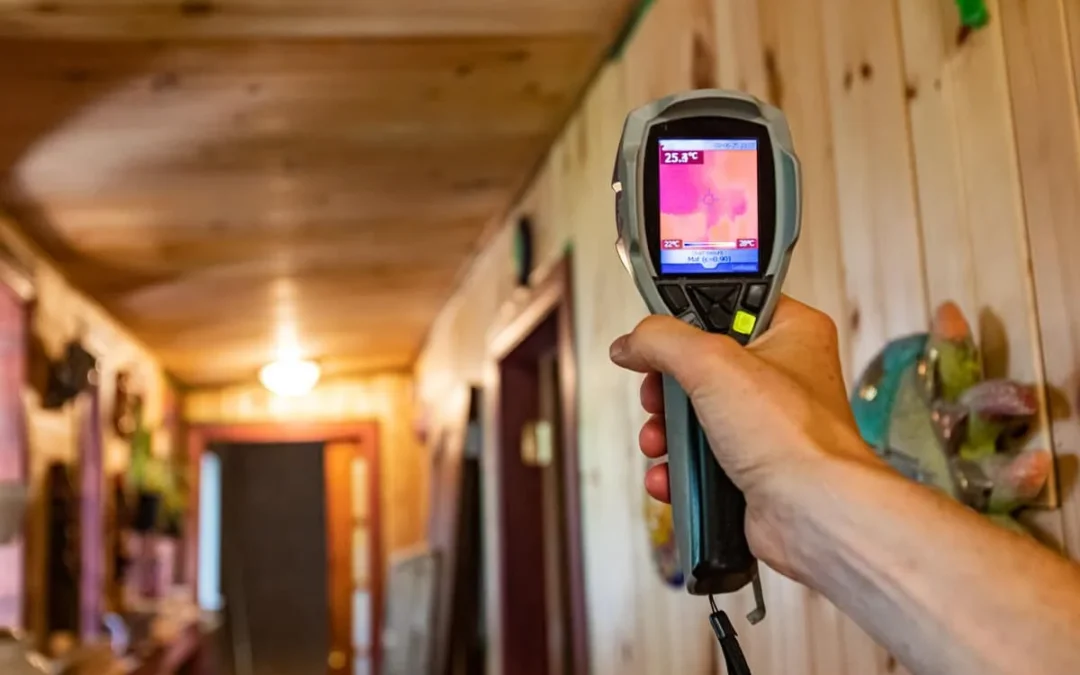
Air Quality Testing Ottawa: Why Your Home Air May Be Toxic
Here’s a fact that surprises most Ottawa homeowners: the air inside your home can be two to five times more polluted than the air outside — and in some cases, up to 100 times worse. According to Health Canada, Canadians spend roughly 90% of their time indoors, yet most people never think about the quality of the air they’re breathing at home.
Poor indoor air quality doesn’t just cause occasional discomfort. It’s linked to persistent headaches, chronic fatigue, worsening allergies and asthma, respiratory infections, and long-term health effects that develop so gradually you may not connect them to your home environment at all. And Ottawa’s climate — with tightly sealed homes running heating systems six months a year — creates perfect conditions for indoor air quality problems to develop.
In this guide, we’ll explain what’s actually polluting the air inside your Ottawa home, the warning signs that your air quality has a problem, and the HVAC-based solutions that make the biggest difference. Many of the most effective fixes are directly tied to your heating and cooling system — and at Gas Man Ottawa, we install the air quality systems and ventilation solutions that transform your indoor environment.
Call (613) 880-3888 to discuss air quality solutions for your home.
What’s Polluting the Air Inside Your Ottawa Home?
Your home’s air is a cocktail of pollutants that come from sources most people never suspect. Understanding what’s in the air is the first step toward fixing it.
Volatile Organic Compounds (VOCs)
VOCs are chemicals that off-gas from everyday household products — cleaning supplies, paint, new furniture, flooring, cabinets, adhesives, air fresheners, and even scented candles. New homes and recently renovated spaces often have the highest VOC levels because building materials actively release these compounds for months or even years. At low concentrations, VOCs cause headaches, eye irritation, and nausea. Long-term exposure to certain VOCs has been linked to more serious health effects including liver and kidney damage.
Carbon Monoxide (CO)
Carbon monoxide is a colourless, odourless gas produced by any gas-fired appliance in your home — your furnace, water heater, gas fireplace, gas stove, and even your car in an attached garage. When these appliances are properly installed and maintained, combustion gases are safely vented outside. But cracked heat exchangers, blocked flues, backdrafting, or improper venting can allow CO to enter your living space. CO poisoning is a medical emergency. Working carbon monoxide detectors on every level of your home are essential — they’re your last line of defence against an invisible killer.
Dust, Dander, and Allergens
Dust mites, pet dander, pollen, and mould spores circulate through your home every time your furnace or air conditioner runs. These particles accumulate in your ductwork, settle on surfaces, and become airborne again with each heating or cooling cycle. For the 25% of Canadians who suffer from allergies or asthma, these particles trigger symptoms daily — especially during Ottawa’s long heating season when windows stay closed for months.
Mould and Moisture
Ottawa’s freeze-thaw cycles, spring melt, and humid summers create ideal conditions for moisture problems in homes. Excess humidity (above 50-60% relative humidity) promotes mould growth on walls, in ductwork, around windows, and in basements. Mould releases spores into the air that can cause respiratory infections, allergic reactions, and worsen asthma. You might not see visible mould growth, but if your home has a persistent musty smell or humidity problems, airborne mould spores are likely present.
Radon
Radon is a naturally occurring radioactive gas that seeps into homes from the ground through cracks in foundations, gaps around pipes, and construction joints. It’s the second leading cause of lung cancer in Canada after smoking. Ottawa sits in a region with moderate to high radon potential, and Health Canada recommends every homeowner test for radon. Unlike the other pollutants on this list, radon requires specialized testing and mitigation — but your HVAC system plays a role in managing radon levels through proper ventilation.
Excess or Insufficient Humidity
Ottawa’s extreme seasons create humidity challenges in both directions. During winter, the cold, dry air combined with your furnace running constantly can drop indoor humidity to 15–25% — well below the comfortable 30–50% range. This causes dry skin, cracked lips, static electricity, dried-out hardwood floors, and increased susceptibility to respiratory infections. In summer, humidity can spike above 60%, creating that sticky, uncomfortable feeling and promoting mould growth. Both extremes are indoor air quality problems that affect health and comfort.
Warning Signs Your Ottawa Home Has an Air Quality Problem
Poor indoor air quality often develops gradually, making it easy to miss. Watch for these indicators:
Health-Related Signs
Symptoms that improve when you leave the house and return when you come home are a classic indicator of an air quality issue — sometimes called “sick building syndrome.” Key signs include persistent headaches or fatigue that improve when you’re outdoors or at work, worsening allergy or asthma symptoms despite medication, frequent colds, sinus infections, or respiratory issues among family members, eye, nose, or throat irritation especially during the heating season, and difficulty sleeping or feeling unrested in the morning.
Home Environment Signs
Your home itself gives clues about air quality problems: condensation on windows (indicating excess humidity), musty or stale odours that won’t go away, visible dust accumulating quickly after cleaning, static electricity and dry skin in winter (too little humidity), and stuffy feeling even when the house is at a comfortable temperature.
HVAC System Signs
Your heating and cooling system can contribute to — or reveal — air quality problems: dusty supply registers, dark streaks around vent openings, a furnace filter that clogs quickly (monthly instead of every 3 months), uneven temperatures between rooms suggesting airflow problems, and unusual odours when the system starts up — burning smells, musty air, or chemical scents.
If you recognize several of these signs, your home likely has an indoor air quality problem worth investigating. The good news is that most air quality issues are solvable with the right HVAC upgrades.
How Your HVAC System Affects Indoor Air Quality
Your furnace, air conditioner, and ductwork aren’t just temperature-control systems — they’re the lungs of your home. Every cubic foot of air in your house passes through your HVAC system multiple times per day. That makes your HVAC system both the biggest potential contributor to air quality problems and the most powerful tool for solving them.
Your HVAC System Can Hurt Air Quality When:
The air filter is dirty or inadequate — a clogged or cheap filter recirculates dust, dander, and particulates instead of trapping them. The ductwork is leaking or contaminated — leaky ducts can pull polluted air from crawlspaces, attics, or wall cavities into your living space. The furnace or gas appliance is malfunctioning — cracked heat exchangers, blocked venting, or improper combustion can introduce carbon monoxide and combustion byproducts. And when there’s no mechanical ventilation — in tightly sealed Ottawa homes, stale air has no way to exchange with fresh outdoor air without a dedicated ventilation system.
Your HVAC System Can Dramatically Improve Air Quality When:
It’s paired with the right upgrades. High-efficiency filtration, mechanical ventilation, humidity control, and air purification systems integrate directly with your existing furnace and ductwork to clean, freshen, and balance the air in your entire home — automatically, with no ongoing effort from you.
HVAC Solutions That Improve Indoor Air Quality
Here are the most effective air quality upgrades Gas Man installs for Ottawa homeowners, starting with the highest-impact solutions:
1. HRV or ERV Ventilation System
A Heat Recovery Ventilator (HRV) or Energy Recovery Ventilator (ERV) is the single most impactful indoor air quality improvement for Ottawa homes. These ventilation systems continuously exchange stale indoor air with fresh outdoor air — while recovering 70–85% of the heat energy from the outgoing air. This means fresh, clean air without the energy penalty of simply opening a window in January. An HRV reduces CO₂ buildup, flushes out VOCs and odours, controls excess moisture, and dilutes airborne contaminants. For tightly sealed Ottawa homes, an HRV is arguably more important than any other air quality device. Ontario Building Code requires HRVs in new construction — but many older Ottawa homes were built without one.
2. High-Efficiency Air Filtration
Upgrading from a basic 1-inch furnace filter to a high-efficiency filtration system dramatically reduces airborne particles. MERV 11–16 media filter cabinets attach to your existing furnace and capture dust, pollen, pet dander, mould spores, and even bacteria. HEPA-grade bypass filters go even further, trapping 99.97% of particles down to 0.3 microns. For Ottawa households with allergy sufferers, pets, or anyone with respiratory sensitivities, upgrading filtration is one of the fastest, most noticeable improvements you can make.
3. Central Humidifier
A central humidifier connects to your furnace and automatically maintains proper humidity levels throughout your entire home during the heating season. Instead of running portable humidifiers in every room, a whole-home unit delivers consistent 30–50% relative humidity with zero daily effort. This eliminates dry skin, nosebleeds, static electricity, and cracked hardwood floors — and reduces susceptibility to colds and respiratory infections that thrive in dry air. For Ottawa’s brutal dry winters, a furnace humidifier is one of the most popular and affordable comfort upgrades.
4. UV Air Purification
UV-C germicidal lights installed inside your HVAC system destroy bacteria, viruses, mould spores, and other biological contaminants as air passes through the system. These units install in the ductwork or near the evaporator coil and operate silently 24/7. UV purification is especially effective at preventing mould growth on the AC evaporator coil — a common hidden source of musty odours and airborne spores in Ottawa homes.
5. Proper Ductwork Sealing
Leaky ductwork is one of the most overlooked air quality problems. When ducts leak in unconditioned spaces (attics, crawlspaces, wall cavities), they can pull in insulation fibres, dust, mould spores, and other contaminants that bypass your air filter entirely. Sealing ductwork also improves heating and cooling efficiency by 20–30%, reducing energy waste. If your home has inconsistent temperatures between rooms, excessive dust, or you’ve never had your ductwork inspected, sealing should be on your short list.
6. Carbon Monoxide Detection
Every Ottawa home with gas appliances should have carbon monoxide detectors installed on every level. Ontario law requires CO alarms near all sleeping areas in homes with fuel-burning appliances or attached garages. Gas Man can install and test CO detectors and perform gas safety inspections to verify that all gas-fired equipment is venting safely.
Air Quality Testing: What It Involves
Air quality testing uses specialized instruments to measure the actual levels of pollutants in your home’s air. While Gas Man Ottawa focuses on HVAC solutions rather than laboratory testing, understanding what testing involves helps you know when it’s needed and what to expect.
What Air Quality Testing Measures
A comprehensive air quality testing assessment can measure particulate matter (dust, pollen, mould spores, dander), VOC levels (volatile organic compounds from building materials and products), carbon dioxide concentration (an indicator of ventilation adequacy — high CO₂ means stale, underventilated air), carbon monoxide levels, humidity and temperature, radon concentration (requires a separate long-term test), and airborne mould spore counts and types.
When to Consider Testing
You should consider air quality testing in Ottawa if family members have unexplained health symptoms that improve away from home, you’ve had water damage or suspect hidden mould, you’re buying a home and want a baseline assessment, you’ve recently renovated and notice chemical odours, or you want to verify that an HRV or air quality system is performing as expected.
Testing Costs in Ottawa
Air quality testing in Ottawa typically ranges from $200–$500 for a basic assessment to $500–$1,000+ for a comprehensive multi-parameter evaluation. Radon testing kits are available for $30–$60 for DIY long-term testing, though professional testing costs $150–$300. If testing reveals HVAC-related issues — poor ventilation, inadequate filtration, humidity imbalance, or combustion gas concerns — Gas Man Ottawa can provide the solutions.
Ottawa-Specific Air Quality Challenges
Several factors make indoor air quality particularly challenging in Ottawa homes:
Tight Building Envelopes
Modern Ottawa homes (and older homes that have been weatherized with new windows, insulation, and air sealing) are built tight to reduce energy costs. This is great for your heating bill but terrible for air quality — pollutants have no way to escape, and fresh air has no way to enter without mechanical ventilation. Homes built to modern energy codes need an HRV or ERV to maintain healthy air exchange.
Extended Heating Season
From November through April, Ottawa homes are sealed up with windows closed. Your furnace recirculates the same air through the same ducts and filter thousands of times. Any pollutants — dust, pet dander, cooking fumes, cleaning chemical residues, off-gassing from furniture — accumulate rather than dissipate. This is why many Ottawa residents notice their worst allergy and respiratory symptoms during winter, not summer.
Extreme Humidity Swings
Ottawa goes from 15–25% indoor humidity in winter to 60–80% in summer without humidity control. This seasonal swing stresses building materials, promotes mould growth, and affects respiratory health year-round. A central humidifier for winter and proper air conditioning for summer dehumidification bring both extremes into the healthy 30–50% range.
Aging Housing Stock
Many Ottawa homes were built in the 1950s–1980s without mechanical ventilation, modern filtration, or humidity control. These older homes may have original ductwork that’s never been cleaned, inadequate exhaust fans, and atmospheric-vented gas appliances that rely on natural draft (rather than sealed combustion) for safe venting. Upgrading the ventilation system and air quality equipment in these homes produces the most dramatic air quality improvements.
Simple Steps to Improve Your Air Quality Today
While HVAC upgrades provide the biggest long-term improvement, there are immediate steps you can take right now:
Upgrade your furnace filter. Replace the cheap 1-inch fibreglass filter with a pleated MERV 8–11 filter. This single change captures significantly more particles and is the most cost-effective air quality improvement you can make. Check it monthly and replace every 1–3 months.
Run your kitchen and bathroom exhaust fans. Use them every time you cook or shower, and let them run for 15–20 minutes afterward. These fans remove moisture, cooking particulates, and VOCs directly at the source.
Control moisture sources. Fix any water leaks promptly. Use your air conditioner or a dehumidifier in summer to keep humidity below 50%. Vent your dryer to the outside (never indoors).
Open windows when weather permits. Even a few minutes of fresh air exchange on mild days helps flush accumulated pollutants. This is a free, immediate solution during Ottawa’s shoulder seasons.
Schedule furnace maintenance. Annual HVAC maintenance includes cleaning components that affect air quality — burners, blower, coils, and drain lines — plus a safety check on gas venting and heat exchangers.
Why Choose Gas Man Ottawa for Air Quality Solutions
Gas Man Ottawa installs the HVAC-based air quality systems that deliver the biggest improvements in your home environment:
- HRV/ERV Ventilation Systems — Fresh air exchange with heat recovery for energy efficiency
- High-Efficiency Filtration — MERV 11–16 media cabinets and HEPA bypass systems
- Central Humidifiers — Whole-home humidity control integrated with your furnace
- UV Air Purification — Germicidal systems that destroy biological contaminants
- Ductwork Sealing and Replacement — Eliminating hidden contamination pathways
- CO Detectors and Gas Safety Inspections — Protecting against combustion gas hazards
We serve homeowners across Central Ottawa, Kanata, Orleans, Barrhaven, Nepean, Manotick, and Gloucester. Check our customer reviews and our service guarantee.
Frequently Asked Questions: Indoor Air Quality in Ottawa
How do I know if my home has an air quality problem?
Common signs include persistent headaches or fatigue that improve when you leave the house, worsening allergies or asthma despite medication, frequent respiratory infections among family members, condensation on windows, musty odours, excessive dust buildup, and a stuffy feeling even at comfortable temperatures. If multiple family members experience similar symptoms, your home’s indoor air quality is worth investigating.
How much does air quality testing cost in Ottawa?
Air quality testing in Ottawa typically ranges from $200–$500 for a basic particulate and VOC assessment to $500–$1,000+ for comprehensive testing including mould sampling. Radon test kits are available for $30–$60 for DIY testing. If testing reveals HVAC-related problems, Gas Man Ottawa can install the ventilation, filtration, and humidity control solutions to fix them.
What is the best way to improve indoor air quality?
The most impactful improvement for Ottawa homes is installing an HRV (Heat Recovery Ventilator) to provide continuous fresh air exchange. Beyond that, upgrading to high-efficiency furnace filtration, adding a central humidifier for winter, and ensuring your ductwork is sealed and clean provide the biggest gains. Regular HVAC maintenance also plays a critical role. Call Gas Man at (613) 880-3888 to discuss options for your home.
Do I need an HRV in my Ottawa home?
If your home was built or significantly renovated after 2006, it likely already has an HRV — Ontario Building Code requires mechanical ventilation in new construction. If your home was built before this and has never had ventilation equipment added, an HRV installation is one of the best investments you can make for air quality. Signs you need one include persistent stuffiness, condensation on windows, high indoor humidity, and lingering cooking or chemical odours.
Can a furnace humidifier help with dry winter air?
Yes. A central humidifier connects to your furnace and automatically maintains healthy humidity levels (30–50%) throughout your entire home during the heating season. It eliminates dry skin, nosebleeds, static electricity, and cracked hardwood floors — and creates an environment where cold and flu viruses are less likely to spread. A furnace humidifier is one of the most popular and affordable comfort upgrades for Ottawa homeowners.
How does my furnace affect air quality?
Your furnace affects indoor air quality in three critical ways. First, the furnace filter captures (or fails to capture) airborne particles every time the system runs. Second, the ductwork distributes whatever is in the air — including dust, allergens, and contaminants — to every room. Third, the furnace burner and heat exchanger must function safely to prevent carbon monoxide from entering your home. Annual furnace maintenance addresses all three.
Is poor indoor air quality dangerous?
It can be. Short-term exposure to indoor pollutants causes headaches, fatigue, and respiratory irritation. Long-term exposure has been linked to chronic respiratory disease, heart disease, and in the case of radon, lung cancer. Carbon monoxide from malfunctioning gas appliances is an immediate life-threatening hazard. Taking indoor air quality seriously protects your family’s health — both now and over the long term.
Should I get my ductwork cleaned?
If you see visible dust or debris around vent openings, notice musty odours when the system runs, have recently renovated (construction dust in ducts), or haven’t had ducts cleaned in 5+ years, professional duct cleaning is worthwhile. However, duct cleaning alone won’t solve underlying air quality problems — you also need adequate filtration, ventilation, and humidity control to keep the air clean long-term.
Breathe Better in Your Ottawa Home
You can’t see most indoor air quality problems — but you can certainly feel their effects. The headaches, the allergies, the stuffy rooms, the dry winter air, the lingering odours — these aren’t things you have to live with. The right HVAC upgrades transform your home environment from a source of health problems to a space where your family breathes clean, fresh, properly humidified air year-round.
Call Gas Man Ottawa today at (613) 880-3888 to discuss air quality solutions for your home, or contact us online. From ventilation systems and humidifiers to advanced filtration and safety detection — we’ll help you breathe easier.