
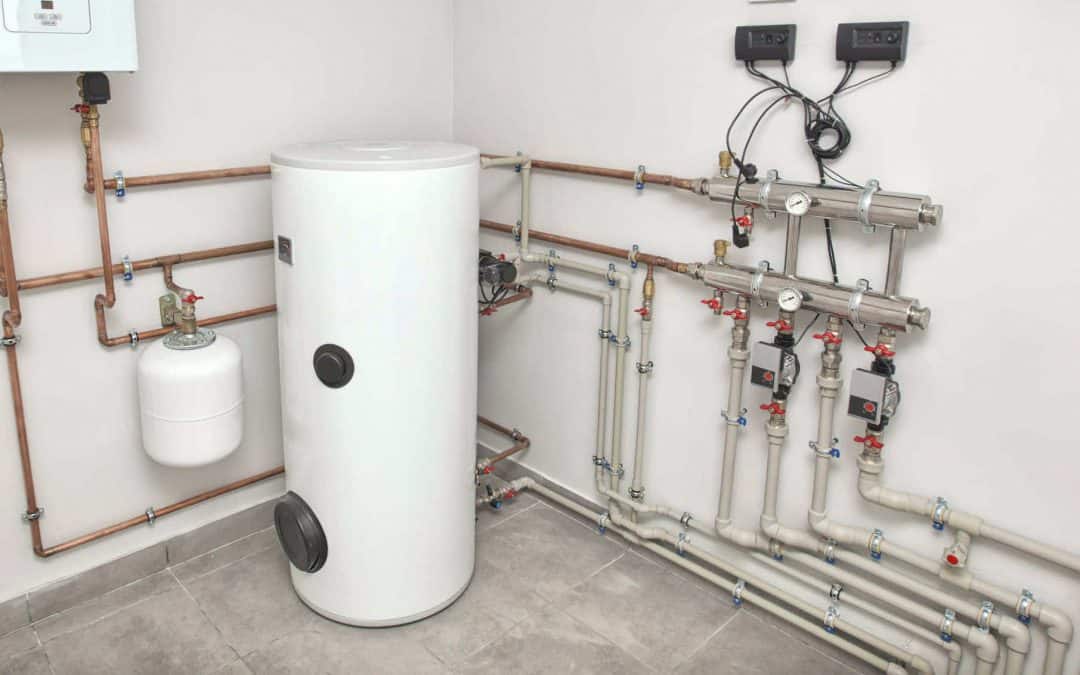
Walk into any Ottawa basement and you’ll likely find a traditional tank water heater—a large cylinder quietly storing 40-60 gallons of hot water. But increasingly, homeowners are discovering tankless water heaters that mount on walls, take up minimal space, and promise endless hot water with lower energy bills. Which technology makes more sense for your Ottawa home? The answer depends on your household size, usage patterns, budget, and long-term plans. This comprehensive comparison examines upfront costs, operating expenses, lifespan, performance in cold climates, and real-world savings to help you make an informed decision.
Understanding Tank Water Heaters: Proven Technology
Traditional tank water heaters heat and store water continuously, maintaining a reservoir of hot water ready for immediate use. When you turn on a hot water tap, heated water flows from the top of the tank while cold water enters the bottom to be heated .
How Tank Water Heaters Work
Gas-fired tank heaters use burners at the bottom to heat water, with combustion gases venting through a flue pipe. Electric models use heating elements submerged in the tank. Both maintain water temperature constantly, cycling on periodically to replace heat lost through tank walls—a phenomenon called standby heat loss .
Storage capacity determines how much hot water you can use before depleting the supply. A family of four typically needs 40-50 gallon tanks for comfortable daily use. Larger families may require 60-80 gallon models.
Tank Water Heater Advantages
- Lower upfront cost: Tank heaters cost $800-$2,000 installed compared to $2,500-$7,500 for tankless systems
- Simpler installation: Most homes already have infrastructure for tank replacement, minimizing installation complexity
- Familiar technology: Plumbers and HVAC technicians have decades of experience servicing tank heaters
- Reliable in power outages: Gas tank heaters continue providing hot water when electricity fails
- Consistent water pressure: Tank systems deliver strong flow rates to multiple fixtures simultaneously
- No minimum flow requirements: Even trickle flows deliver hot water instantly
Tank Water Heater Disadvantages
- Standby heat loss: Energy wasted maintaining water temperature 24/7, even when not using hot water
- Limited hot water supply: Once the tank empties, you wait 30-60 minutes for recovery
- Large space requirements: Tank heaters occupy significant basement or utility room space
- Shorter lifespan: Tank heaters last 8-12 years before needing replacement
- Flood risk: Failed tanks can dump 40-60 gallons into your basement, causing extensive water damage
- Water quality degradation: Sediment accumulation affects efficiency and water quality over time
Understanding Tankless Water Heaters: On-Demand Technology
Tankless water heaters heat water only when you need it. When a hot water tap opens, cold water flows through the unit’s heat exchanger, getting heated instantly by gas burners or electric elements. No storage tank means no standby heat loss .
How Tankless Water Heaters Work
Flow sensors detect water movement and activate heating elements. Powerful burners or electric coils heat water passing through compact heat exchangers. Temperature sensors adjust heating to maintain your set temperature precisely. When you close the tap, the system shuts off completely .
Tankless heaters are rated by flow rate—gallons per minute they can heat to a specific temperature rise. Ottawa’s cold groundwater (typically 4-8°C in winter) requires more heating capacity than warmer regions .
Tankless Water Heater Advantages
- Endless hot water: Never run out during long showers or when multiple people use hot water simultaneously
- Energy efficiency: Save 20-40% on water heating costs by eliminating standby heat loss
- Longer lifespan: Tankless units last 18-20+ years—nearly double tank heater lifespans
- Space savings: Wall-mounted units free up valuable floor space in basements
- Reduced flood risk: No large tank to fail means minimal leak damage potential
- Cleaner water: No stored water means no sediment or rust accumulation
- Precise temperature control: Digital controls maintain exact output temperatures
Tankless Water Heater Disadvantages
- Higher upfront costs: Equipment and installation cost 2-3 times more than tank heaters
- Complex installation: May require gas line upgrades, new venting, or electrical service improvements
- Flow rate limitations: Simultaneous high-demand use (multiple showers plus dishwasher) can exceed capacity
- Temperature inconsistency: “Cold water sandwich” effect can occur when turning water on and off quickly
- Power dependency: Most models require electricity even for gas units, making them vulnerable to outages
- Higher repair costs: Complex electronics and specialized components increase service expenses
Cost Comparison: The Financial Reality
Understanding true costs requires examining purchase price, installation, operating expenses, maintenance, and replacement cycles over time.
Initial Purchase and Installation Costs
Tank Water Heaters:
- Basic 40-50 gallon gas tank: $800-$1,400
- High-efficiency gas tank: $1,500-$2,000
- Standard installation: $300-$700
- Total installed cost: $1,100-$2,700
Tankless Water Heaters:
- Gas tankless unit: $1,600-$2,500
- Premium models: $2,000-$3,000
- Complex installation: $1,000-$4,500 (gas line upgrades, venting, electrical)
- Total installed cost: $2,500-$7,500
Tankless installation costs vary dramatically based on your home’s existing infrastructure. Homes with adequate gas supply and nearby venting see lower costs. Older homes requiring gas line enlargement, new venting systems, or electrical panel upgrades face higher expenses .
Annual Operating Costs
Energy consumption determines long-term value. Ottawa’s natural gas rates (approximately $0.35-$0.45 per cubic meter) and electricity costs ($0.12-$0.15 per kWh) factor into calculations.
Tank Water Heater Annual Costs:
- Average household energy consumption: $350-$550 annually
- Standby heat loss: 10-20% of total energy consumption
- Efficiency decreases as sediment accumulates
Tankless Water Heater Annual Costs:
- Average household energy consumption: $250-$400 annually
- No standby losses—energy used only when heating water
- Efficiency remains consistent throughout lifespan
Annual savings with tankless: $100-$150 depending on household usage patterns and utility rates .
15-Year Total Cost of Ownership
Comparing total costs over typical equipment lifespans reveals true value :
Tank Water Heater (15 years):
- Initial installation: $1,800
- Operating costs (15 years @ $450/year): $6,750
- Replacement after 10 years: $1,800
- Maintenance and repairs: $650
- Total 15-year cost: $11,000
Tankless Water Heater (15 years):
- Initial installation: $4,500
- Operating costs (15 years @ $325/year): $4,875
- No replacement needed (20+ year lifespan): $0
- Maintenance and repairs: $800
- Total 15-year cost: $10,175
Over 15 years, tankless systems typically save $800-$1,500 despite higher upfront costs . Savings increase if you remain in your home beyond 15 years since tankless units don’t require replacement.
Payback Period Analysis
With $3,000 higher installation costs and $125 annual savings, typical tankless payback periods range from 10-15 years . However, this calculation doesn’t account for:
- Avoided second tank replacement (saves $1,800-$2,500)
- Reduced risk of catastrophic tank failure and water damage
- Increased home resale value from modern equipment
- Improved utility efficiency over time as energy costs rise
When factoring in these considerations, effective payback occurs in 8-12 years for gas tankless systems .
Performance in Ottawa’s Cold Climate
Ottawa’s harsh winters significantly impact water heater performance. Groundwater temperatures drop to 4-8°C during winter months, requiring substantially more energy to heat water to usable temperatures .
How Cold Affects Tank Water Heaters
Tank heaters with high recovery rates handle cold groundwater effectively. The stored water provides a buffer—incoming cold water mixes with hot water already in the tank, maintaining adequate supply during peak use. However, recovery times increase in winter as heaters work harder to bring frigid groundwater to temperature .
Gas tank heaters generally outperform electric models in cold climates due to higher BTU output and faster recovery rates .
How Cold Affects Tankless Water Heaters
Cold groundwater challenges tankless systems more than tank heaters. Flow rates must slow to allow adequate heating time, or output temperatures drop below comfortable levels. A tankless heater rated for 5 gallons per minute at 30°C temperature rise may only deliver 3-3.5 gallons per minute when heating 4°C Ottawa winter groundwater to 50°C .
Proper sizing becomes critical in cold climates. Many Ottawa homes require larger tankless units than comparable homes in warmer regions. Gas tankless models handle cold climates better than electric units due to higher heating capacity .
Cold Climate Recommendations
For tankless systems in Ottawa:
- Choose gas models over electric for better cold-weather performance
- Size units for coldest groundwater temperatures, not annual averages
- Install freeze protection features for outdoor or unheated installations
- Consider multiple units for very large homes with high simultaneous demand
- Ensure adequate gas supply—many homes need gas line upgrades to support tankless BTU requirements
Installation Requirements and Considerations
Installation complexity dramatically affects total project costs and determines which system works best for your home.
Tank Water Heater Installation
Replacing an existing tank heater is straightforward when upgrading to similar capacity. Licensed plumbers disconnect old units, install new tanks, connect water lines, and establish venting. Most installations complete in 2-4 hours with minimal disruption .
Existing gas lines, water connections, and venting usually accommodate new tanks without modifications. This simplicity keeps installation costs reasonable.
Tankless Water Heater Installation
Tankless installations are significantly more complex, requiring:
Gas Line Upgrades: Tankless burners consume 150,000-200,000 BTU/hour compared to 40,000 BTU/hour for tank heaters. Existing ½-inch gas lines rarely provide adequate supply. Most installations require ¾-inch or larger gas lines from the meter to the unit—expensive work involving basement ceiling access and permits .
Venting Changes: Tankless units require specialized stainless steel venting systems. Conventional B-vent used for tank heaters doesn’t work. New venting must route to exterior walls, potentially requiring structural modifications .
Electrical Requirements: Even gas tankless heaters need electrical connections for ignition and controls. Some models require dedicated 15-20 amp circuits. Electric tankless units demand massive electrical capacity—multiple 40-50 amp circuits at 240 volts. Most homes need electrical panel upgrades to support electric tankless heaters.
Water Line Modifications: Tankless units have specific inlet and outlet locations. Existing plumbing may require rerouting.
These factors explain why tankless installation costs 3-5 times more than tank replacement. However, homes built with tankless infrastructure see minimal cost differences.
For professional water heater services in Ottawa, Gas Man provides expert tank water heater installation and tankless water heater installation with licensed TSSA gas technicians.
Maintenance and Repair Considerations
Both systems require maintenance, but frequency, complexity, and costs differ significantly.
Tank Water Heater Maintenance
Annual maintenance includes:
- Draining several gallons to remove sediment buildup
- Testing temperature-pressure relief valves
- Inspecting anode rods (sacrificial components that prevent tank corrosion)
- Checking burner operation and flame quality
- Inspecting venting systems
Homeowners can perform basic maintenance themselves. Professional service costs $100-$150 annually. However, many Ottawa homeowners skip maintenance entirely—contributing to shorter lifespans and reduced efficiency.
Common repairs include:
- Thermocouple replacement: $150-$250
- Heating element replacement (electric): $200-$350
- Pressure relief valve: $150-$200
- Anode rod replacement: $200-$300
Once tanks develop leaks, replacement is the only option—tanks cannot be repaired.
Tankless Water Heater Maintenance
Annual maintenance requirements:
- Descaling/flushing to remove mineral buildup (critical in Ottawa’s hard water)
- Cleaning inlet filters
- Inspecting and cleaning burners
- Testing safety sensors and controls
- Checking venting systems
Tankless maintenance requires professional service—DIY descaling risks damaging expensive components. Annual service costs $150-$250. Neglecting maintenance voids warranties and causes premature failure.
Common repairs include:
- Flow sensor replacement: $200-$400
- Ignition system repairs: $300-$500
- Heat exchanger descaling (beyond annual maintenance): $200-$350
- Circuit board replacement: $400-$700
Tankless repairs often cost more than tank repairs due to complex electronics and specialized components. However, since tankless units last twice as long, total lifetime repair costs end up similar.
Schedule professional water heater maintenance with Gas Man’s annual HVAC maintenance service.
Household Size and Usage Considerations
Your family’s hot water consumption patterns significantly influence which system performs better.
Small Households (1-2 People)
Tank heaters work well for small households with moderate hot water needs. A 40-gallon tank provides adequate supply for daily showers, dishes, and laundry. Standby heat losses matter less when overall consumption is low.
Tankless systems may not justify their higher cost for minimal use. However, if you’re planning to stay in your home 15+ years, tankless still delivers better long-term value.
Medium Households (3-4 People)
This range represents the sweet spot for tankless systems. Families with 3-4 members frequently experience tank heater limitations—back-to-back morning showers deplete tanks, forcing waits for recovery. Tankless eliminates this frustration while delivering meaningful energy savings on moderate consumption.
A properly sized tankless heater (capable of 6-7 GPM at 40°C temperature rise) comfortably serves medium households even during peak demand periods.
Large Households (5+ People)
Large families benefit most from tankless technology—endless hot water prevents scheduling showers around tank recovery times. However, simultaneous demand can challenge single tankless units. Homes with 5+ occupants may need:
- Larger capacity tankless units (8+ GPM at 40°C rise)
- Multiple tankless units serving different zones
- Hybrid systems combining tankless and small recirculation tanks
Alternatively, large tank heaters (60-80 gallons) with high recovery rates serve large families effectively at lower installation costs.
Environmental and Efficiency Considerations
Energy efficiency impacts both operating costs and environmental footprint.
Tank Water Heater Efficiency
Modern high-efficiency tank heaters achieve energy factors (EF) of 0.67-0.70 for gas models, meaning 67-70% of fuel energy converts to hot water. Electric tanks reach 0.90-0.95 EF. However, standby losses reduce real-world efficiency by 10-20% as heat escapes through tank walls continuously.
Tankless Water Heater Efficiency
Gas tankless units achieve 0.82-0.98 EF, with no standby losses. Real-world efficiency matches rated efficiency. Over a year, this translates to 20-40% less energy consumption compared to tank heaters—significant savings and reduced carbon emissions .
Carbon Footprint
For gas water heaters in Ottawa:
- Tank heater: approximately 1.2-1.5 tonnes CO2 annually
- Tankless heater: approximately 0.7-1.0 tonnes CO2 annually
Switching to tankless reduces your home’s carbon emissions by 30-40% from water heating alone.
Which System Is Right for Your Ottawa Home?
The ideal choice depends on your specific circumstances, priorities, and home characteristics.
Choose Tank Water Heater If:
- Your budget is limited and you need immediate replacement
- You’re planning to sell your home within 5-7 years
- Your hot water consumption is low (1-2 people)
- Your home lacks infrastructure for tankless installation (small gas lines, challenging venting)
- You prefer simple, familiar technology with low-cost maintenance
- You want reliable operation during power outages (gas tank models)
- Your household has consistent, predictable usage patterns without high simultaneous demand
Choose Tankless Water Heater If:
- You plan to stay in your home 10+ years
- You frequently run out of hot water with your current tank
- Energy efficiency and environmental impact matter to you
- You want to maximize usable space in your basement
- You have 3+ family members with high hot water demand
- You’re building a new home or doing major renovations (infrastructure already being modified)
- You want precise temperature control and endless hot water
- Long-term operating cost savings outweigh higher upfront investment
Consider Hybrid Systems
Some Ottawa homeowners install small tankless units as supplements to existing tank heaters, or use point-of-use tankless units for distant bathrooms. These hybrid approaches deliver benefits of both technologies while mitigating individual drawbacks.
Service Area Coverage
Gas Man Ottawa provides expert water heater installation, repair, and maintenance throughout the Ottawa region:
- Orleans water heater service
- Kanata water heater installation
- Nepean plumbing services
- Manotick HVAC services
- Barrhaven, Gloucester, Vanier, and surrounding communities
Our TSSA-licensed gas technicians provide honest advice about which water heating system best serves your needs, budget, and home infrastructure.
Frequently Asked Questions
How long do tankless water heaters really last compared to tank heaters?
Tankless water heaters typically last 18-20+ years with proper maintenance, while tank heaters last 8-12 years. This nearly double lifespan means you’ll replace a tank heater twice during one tankless unit’s lifetime, significantly affecting long-term costs and value.
Will a tankless water heater save me money on my energy bills?
Yes, tankless systems typically save 20-40% on water heating costs by eliminating standby heat losses. For average Ottawa households, this translates to $100-$150 annual savings. However, higher installation costs mean payback periods of 8-12 years depending on usage patterns and utility rates.
Can I install a tankless water heater in my older Ottawa home?
Yes, but installation costs may be higher due to required infrastructure upgrades. Older homes often need gas line enlargement, new venting systems, and sometimes electrical panel upgrades. Professional assessment determines specific requirements and costs. Gas Man Ottawa evaluates your home’s infrastructure and provides accurate installation estimates.
Do tankless water heaters work well in Ottawa’s cold winters?
Yes, when properly sized for cold climate operation. Ottawa’s frigid groundwater requires larger capacity tankless units than warmer regions. Gas tankless models handle cold weather better than electric units. Choose units rated for high GPM at 40-45°C temperature rise for reliable Ottawa winter performance.
What size tankless water heater do I need for my family?
Calculate simultaneous hot water demand. A family of four typically needs 6-7 GPM capacity at 40°C temperature rise for Ottawa’s cold groundwater. Larger families or homes with high simultaneous use (multiple showers plus dishwasher/laundry) need 8+ GPM capacity. Professional sizing ensures adequate performance.
Are tankless water heaters more expensive to repair than tank heaters?
Individual tankless repairs often cost more due to complex electronics and specialized components. However, since tankless units last twice as long with fewer failures, total lifetime repair costs end up similar to tank heaters that require replacement every 10 years.
Can I do tankless water heater maintenance myself?
Basic filter cleaning is DIY-friendly, but annual descaling requires professional service. DIY descaling risks damaging expensive heat exchangers with improper chemicals or procedures. Professional maintenance costs $150-$250 annually and maintains warranty validity. Tank heater maintenance is simpler and more DIY-accessible.
Will a tankless water heater increase my home’s resale value?
Modern tankless systems appeal to buyers interested in energy efficiency and reduced operating costs. While difficult to quantify exact value increases, homes with tankless water heaters typically command modest premiums over comparable homes with older tank heaters. Energy-efficient features increasingly influence buyer decisions.
Making Your Decision
Choosing between tankless and tank water heaters involves weighing upfront costs against long-term savings, considering your household’s hot water demands, and evaluating your home’s existing infrastructure. Neither option is universally “best”—the right choice depends on your specific situation.
Tank heaters deliver reliable, affordable hot water with lower initial investment. Tankless systems provide endless hot water, significant energy savings, and longer lifespans despite higher upfront costs. For Ottawa homeowners planning to stay in their homes long-term, tankless systems typically deliver better overall value. For those with budget constraints or shorter ownership timelines, quality tank heaters remain excellent choices.
Ready to upgrade your water heater? Gas Man Ottawa’s licensed TSSA gas technicians provide expert consultation, accurate system sizing, and professional installation for both tank and tankless water heaters. We’ll assess your home’s infrastructure, explain your options, and provide transparent pricing for all alternatives.
Call (613) 880-3888 or request your free estimate online today. We serve Ottawa, Orleans, Kanata, Barrhaven, Nepean, Manotick, and surrounding areas with professional water heater installation, tank water heater repair, and tankless water heater service.
Recent Comments